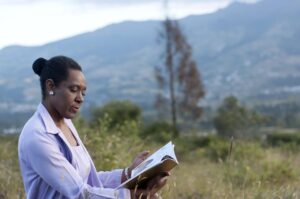
This year marks an important milestone for the Canadian Journal of Rural Medicine (CJRM): thirty years of publication, advocacy, scholarship, and community-building in service of rural medicine in Canada and beyond.
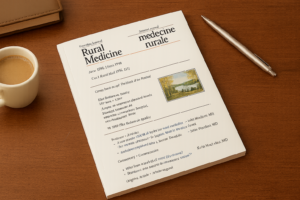
When CJRM was founded in 1996, the very idea of “academic rural medicine” was often treated as an oxymoron. Rural generalist practice was seen by many as practical rather than scholarly, experiential rather than evidence-generating. Research, publication, and academic discourse were presumed to belong to large urban centres and tertiary institutions. Yet the physicians who built CJRM understood something fundamental: rural medicine is not a lesser version of medicine practiced elsewhere. It is its own discipline, demanding breadth, adaptability, innovation, courage, and deep connection to community.

CJRM was created to give that discipline a scholarly voice.
As the first rural medical journal in the world, CJRM helped define and legitimize rural medicine as a field worthy of rigorous inquiry, thoughtful debate, and international attention. Over three decades, the journal has become more than a publication. It has become a meeting place for ideas, a repository of lived experience, and a record of how rural physicians care for communities across vast geographies and limited-resource settings.
Today, with an Impact Factor of 0.8, CJRM stands as evidence that rural scholarship not only exists, but matters. The journal’s influence extends far beyond citation metrics. Its pages have documented innovations born out of necessity, highlighted inequities in access and outcomes, explored rural training pathways, and shared the realities of practice in communities often overlooked by mainstream academic medicine.
Importantly, CJRM has helped generations of rural physicians recognize themselves as scholars. For many authors, a CJRM submission was their first publication. For others, it was the first place where their experiences felt understood. Rural physicians who once doubted whether their observations or ideas belonged in academic literature discovered that their work could shape policy, education, and practice.
That transformation did not happen by accident.
The success and longevity of CJRM have always depended on people willing to contribute their time, expertise, and conviction to a shared mission. Editors, peer reviewers, authors, and readers have collectively sustained a journal that was never simply about publication for publication’s sake. The journal has always reflected the values of rural medicine itself: collegiality, pragmatism, mentorship, resilience, and service.

CJRM’s editorial leadership has carried that vision forward across decades. Under the guidance of Scientific Editor Peter Hutten-Czapski and Associate Scientific Editor Gordon Brock, alongside an editorial team spread across rural and remote communities from British Columbia to Newfoundland and Labrador, the journal continues to embody the national scope and local realities of rural practice in Canada.
The current masthead itself tells a story about rural medicine in this country. The journal is shaped not from a single metropolitan centre, but from Haileybury, Temiscaming, Golden, Kenora, Blind Bay, Happy Valley–Goose Bay, Grand Bend, Salt Spring Island, Sudbury, Thunder Bay, Ottawa, and beyond. That geographic diversity reflects the strength of the rural medicine movement itself: rooted in community, connected through shared purpose.
 No reflection on CJRM’s history would be complete without acknowledging the extraordinary contribution of Managing Editor Suzanne Kingsmill, whose long-standing dedication has helped sustain the journal through years of growth and evolution. Behind every issue is a tremendous amount of invisible work — coordinating manuscripts, supporting authors, maintaining standards, managing deadlines, and ensuring continuity. Suzanne has done this work with professionalism, patience, and care over many years of service.
As she retires from her role, the CJRM community extends deep gratitude for her contribution to the journal and to rural medicine scholarship in Canada. Her steady presence has been part of the journal’s foundation, and her impact will continue to be felt in the many authors, editors, and readers she has supported along the way.
 The journal’s accomplishments also belong to its reviewers — often busy rural clinicians themselves — who have volunteered their expertise to strengthen manuscripts and mentor emerging writers. Peer review in a small scholarly community is an act of generosity as much as academic rigor. Likewise, readers have sustained CJRM by engaging critically with its content, applying lessons to practice, and contributing to an ongoing national conversation about rural health care.
Over thirty years, rural medicine itself has evolved dramatically. Technology has changed how care is delivered. Distributed medical education has expanded. Rural physician training pathways have strengthened. Research networks have grown. Rural voices are increasingly represented in national discussions around health policy, workforce planning, Indigenous health, emergency care, maternity services, and access to care.
CJRM has been there throughout these changes — documenting them, shaping them, and often anticipating them.
 At a time when many rural communities continue to face significant challenges in recruitment, retention, access, and infrastructure, the role of rural scholarship remains essential. Evidence generated in urban centres alone cannot fully address the realities of rural practice. Rural communities deserve research grounded in their contexts, informed by their needs, and led by those who live and work alongside them.
That principle remains at the heart of CJRM.
As the official journal of the Society of Rural Physicians of Canada, CJRM continues to serve as both witness and catalyst: witnessing the realities of rural care while helping advance the knowledge, advocacy, and innovation necessary to strengthen it.
Thirty years ago, establishing a rural medical journal required optimism and persistence. Sustaining it for three decades required something more enduring: a community that believed rural medicine deserved a scholarly home of its own.
That belief has now shaped generations of physicians and contributed to the maturation of rural medicine as a recognized academic discipline. What was once dismissed as an oxymoron has become an established and growing field of scholarship.
The work, of course, is not finished.
But after thirty years, CJRM can look back with pride at what has been built — and forward with confidence to the work still ahead.
Peter Hutten-Czapski
Scientific Editor
Canadian Journal of Rural Medicine